HEBEI LUZE NEW MATERIAL TECHNOLOGY CO.,LTD.
Страна:
Китай
Страна происхождения:
Китай
Целевой рынок:
Греция, Исламская Республика Иран, Саудовская Аравия, Турция, Объединенные Арабские Эмираты
Гостиная:
7
Стенд №:
7162
Сайт:
www.luzetech.com
Brands:
- LUZE / Китай
Разделы:
Строительные материалы и конструкции
- Стальные конструкции и профили, элементы
- Устойчивые к землетрясениям материалы и сейсмическое укрепление
Социальные сети:
Устойчивые к землетрясениям материалы и сейсмическое укрепление
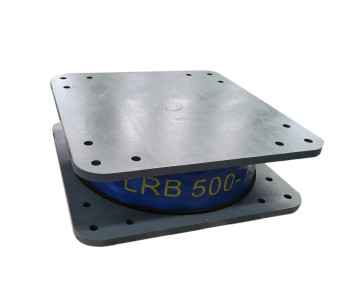
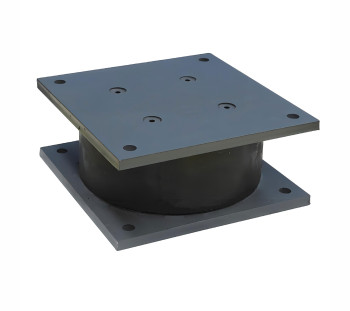
Seismic Isolation Rubber Bearing for Buildings
Rubber isolation bearings are mainly made by laminating multiple layers of rubber and steel plates and bonding them through high-temperature vulcanization. Among them, rubber isolation bearings are further divided into Lead Rubber Bearings (LRB) and Linear Natural Rubber Bearings (LNR).
Building isolation rubber bearings are the most widely used and technically mature seismic isolation devices in the world.
Product advantages
1,Lead rubber isolation bearings have excellent durability, with good performance in low-cycle fatigue resistance, hot air aging resistance, ozone aging resistance, acid resistance, and water resistance, and their service life can reach 60 to 80 years.
2,They have sufficient safety margin: 250% horizontal deformation will not affect normal use, and 450% horizontal deformation will not cause damage.
3,They have sufficient vertical bearing capacity to ensure stable support, and the isolation layer in the lead rubber isolation bearing structure has a stable elastic reset function.
Executive Standard:
ISO 22762:2024
EN 15129:2018
Устойчивые к землетрясениям материалы и сейсмическое укрепление
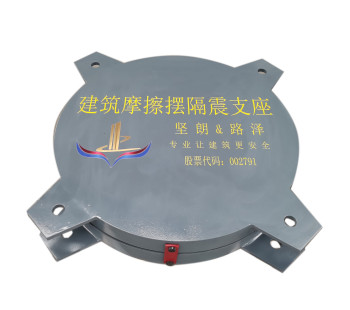
High Damping Rubber Bearing (HDR)
High Damping Rubber Bearings (HDR) are rubber bearings used in fields such as bridges and building construction, offering excellent seismic isolation performance.
1,The stiffening steel plates provide vertical bearing capacity to ensure the safety of buildings during daily use.
2,Natural rubber has strong adhesion to steel plates, enabling resistance to horizontal vibrations and wind loads.
3,During an earthquake, the special damping formula allows the rubber material to convert seismic kinetic energy into thermal energy through its viscoelastic properties, dissipating horizontal vibration energy and reducing the seismic forces acting on the building.
Executive Standard
GB/T 20688
ISO 22762:2024
ISO 23618 : 2022
EN 1337:2005
EN 15129:2018
Устойчивые к землетрясениям материалы и сейсмическое укрепление
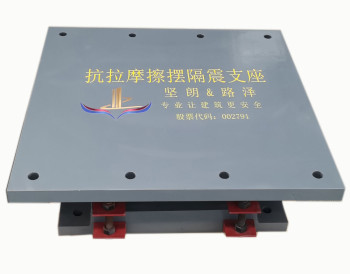
Friction Pendulum Bearing(FPB)
When an earthquake occurs, the horizontal force of the superstructure overcomes the friction between the spherical sliding surface and the slider. The structure then performs a pendulum motion with the distance from the spherical center as the pendulum length. Seismic energy is dissipated through the continuous swinging of the superstructure in the form of frictional heat.
Product Advantages:
High bearing capacity, good stability, excellent reset function, strong resistance to horizontal torsion, and high damping ratio.
Strong self-centering capability.
High temperature resistance, with mechanical properties less affected by ambient temperature.
Executive Standard
GB/T 37358-2019
ISO 23618 : 2022
EN 15129:2018
Устойчивые к землетрясениям материалы и сейсмическое укрепление
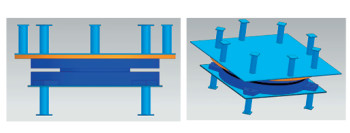
Tensile Friction Pendulum Isolation Bearing(TFPB)
Based on conventional friction pendulum isolation bearings, Tensile friction pendulum isolation bearings are equipped with a key tensile locking mechanism. While retaining all the excellent seismic isolation properties of FPB (adjustable period, friction energy dissipation, self-centering), they are provided with reliable and strong tensile capacity, ensuring that the bearing remains a continuous and reliable structural component under complex stress conditions of tension, compression and shear.
Structural Characteristics
The traditional open spherical groove is transformed into a hollow "spherical bowl" with upper and lower interlocking parts.
Under tensile load, the upper cover plate tends to lift upward, but the internal rotating body is "locked" by the upper inner surface of the spherical bowl. The tensile force is transmitted along the path: rotating body → upper wall of the spherical bowl → connecting bolts / structure → lower base plate, forming a continuous tensile stress flow. The rotating body and the spherical bowl remain engaged at all times.
Executive Standard
GB/T 37358-2019
ISO 23618 : 2022
EN 15129:2018
Устойчивые к землетрясениям материалы и сейсмическое укрепление
Anti-separation Friction Pendulum Isolation Bearing(ASFPS)
Anti-separation friction pendulum isolation bearing is an improved seismic isolation product developed on the basis of traditional friction pendulum isolation bearings (FPB), with additional anti-lift and anti-separation mechanisms. Its core function is to dissipate energy through the curved sliding surface and extend the structural period during an earthquake, while preventing the upper and lower bearing plates or the spherical crown from separating from the bearing plate.
The anti-separation device uses elastic materials such as springs, permanent magnets, and rubber, and is installed between the bearing plate and the embedded plate. During installation, a certain pressure is applied to the anti-separation device, causing the elastic body to deform and store energy. When vertical vibration occurs, the stored deformation is released, pressing the bearing plate tightly to prevent the friction surface of the friction pendulum from disengaging.
Executive Standard
GB/T 37358-2019
ISO 23618 : 2022
EN 15129:2018
Устойчивые к землетрясениям материалы и сейсмическое укрепление
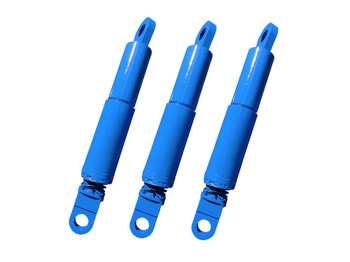
Viscous Fluid Damper(VFD)
A viscous fluid damper is a passive velocity-dependent energy dissipation and seismic mitigation device that uses viscous material as the damping medium. It is mainly used to absorb and dissipate energy from structural vibrations caused by wind, earthquakes, moving loads, and dynamic equipment, and is suitable for building structures and equipment foundation projects in all seismic intensity zones.
Product Advantages
1,The viscous fluid damper features high energy dissipation efficiency, without increasing structural stiffness or altering the natural vibration period of the structure.
2,The viscous fluid damper has an aesthetic appearance, a compact structure, and is easy to install.
3,The viscous fluid damper offers stable performance and can be used for both seismic resistance and wind resistance.
Executive Standard
ISO 23618 : 2022
EN 15129:2018
Устойчивые к землетрясениям материалы и сейсмическое укрепление
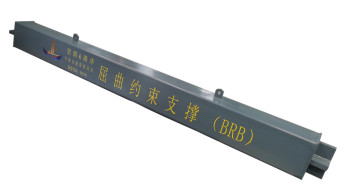
Buckling Restrained Brace
A buckling restrained brace is a dual-function structural component installed in building structures, serving to bear loads under normal conditions and dissipate energy during earthquakes. It consists of a core material, a sleeve that restrains the core from buckling, and unbonded and filling materials placed between the core and the sleeve.
the application of buckling restrained braces can comprehensively enhance the seismic performance of traditional braced frame structures.
Product Advantages
- Low production cost and low daily maintenance cost, short construction period, and low life-cycle cost of the building;
- Provides both stiffness and damping simultaneously, and is compatible with viscous damping seismic mitigation technology;
- Protects the main structure under frequent earthquakes, design-basis earthquakes, and maximum considered earthquakes, facilitating performance-based design.
Устойчивые к землетрясениям материалы и сейсмическое укрепление
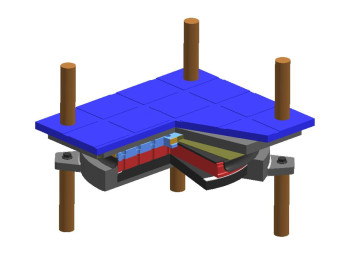
Pot Rubber Bearing
The working principle of a pot rubber bearing is to utilize the rubber block enclosed in the steel pot cavity, which exhibits the volume incompressibility of a fluid under triaxial stress. This reliably transfers the reaction force of the bridge superstructure to the pier and abutment, while enabling the rotation of the bridge girder ends.
Meanwhile, it accommodates the horizontal displacement of the bridge superstructure caused by factors such as temperature changes and concrete creep and shrinkage through the free sliding between the PTFE plate and stainless steel plate, thereby ensuring the operational safety of the bridge.
This product is suitable for all types of high-grade highway bridges and other large and medium-sized bridges.
Executive Standard:
ISO 23618 : 2022
EN 1337
Устойчивые к землетрясениям материалы и сейсмическое укрепление
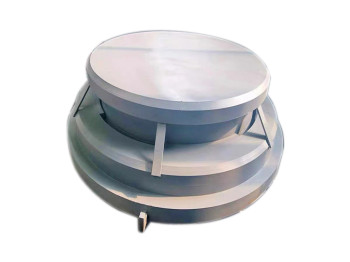
Spherical Steel Bearing
A spherical bearing consists of an upper plate, a lower plate, a convex middle plate, and two polytetrafluoroethylene (PTFE) plates of different shapes.
Product Features
- Uniform load transfer & high safety
Spherical contact design ensures even stress distribution, avoids local stress concentration, effectively protects the beam and pier structure, and eliminates potential safety hazards.
- Flexible adaptability & wide application
Multi-directional free rotation (rotation angle up to 0.06 rad), capable of realizing bi-directional, uni-directional or fixed displacement, perfectly meeting the complex deformation requirements of wide bridges, curved bridges and sloped bridges.
- Long service life & low maintenance
Made of all-steel structure with PTFE sliding plates, free from rubber aging, with a service life of ≥ 50 years.
- Suitable for heavy loads & cost-effective
Vertical bearing capacity ranges from 1000 kN to 30000 kN, suitable for heavy-duty bridges.
Standard:
ISO 23618 : 2022
EN 1337
Устойчивые к землетрясениям материалы и сейсмическое укрепление
Laminated Rubber Bearing
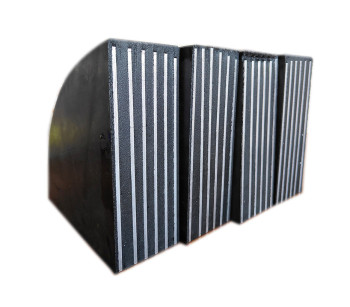
Laminated rubber bearings are seismic isolation and load-bearing components used in engineering structures such as bridges and buildings. As one of the basic types of bridge bearings, they primarily accommodate structural displacement and deformation through the elastic deformation of rubber materials while transferring loads.
Plain Laminated Rubber Bearing:
This is the basic type, suitable for small-to-medium span bridges and low-rise buildings, and mainly bears vertical loads and horizontal displacements.
PTFE Sliding Laminated Rubber Bearing:
A layer of polytetrafluoroethylene (PTFE) sliding plate is bonded to the top surface of the bearing, which contacts the stainless steel plate of the bridge girder. This reduces frictional resistance and allows the girder to undergo horizontal sliding displacement (such as bridge expansion and contraction), making it widely used in long-span continuous girder bridges.
Executive Standard:
ISO 23618 : 2022
EN 1337